김창열 (1929 - 2021)
50년이 넘는 세월 동안 김창열(1929-2021)은 물방울을 탐구해왔다. 마치 캔버스 천에서 스며나오는 듯한 모습을 띄는 그의 물방울은 실체를 가지다가 투명하게 사라지는 특성을 지닌다. 금방이라도 떨어질 듯한 물방울은 흐르다가 멈춘 순간을 담아내기도 하고, 바닥에 흡수되는 과정을 보여주기도 한다. 젖음과 마름, 밝음과 어두움 사이의 균형을 이루는 물방울은 실재와 추상의 경계를 넘나들며 관람자를 깊은 사색으로 이끈다. 이러한 명상적이고 치유적인 요소는 예술가 자신이 경험한 일제강점기, 전쟁, 분단 등 한국 현대사의 상처에서 출발해 보편적인 정화의 효과를 갖는다. 김창열은 유년 시절 할아버지에게서 서예를, 이쾌대 화백에게서 회화를 배우며 예술적 기초를 다졌으며, 서울대학교 졸업 후, 박서보, 정창섭과 함께 한국 앵포르멜 운동을 이끌었다. 1961년 제2회 파리 비엔날레와 1965년 상파울루 비엔날레에 작품을 출품하고, 1969년 아방가르드 페스티벌에 참여했다. 1972년 살롱 드 메이(Salon de Mai)에서 Event of Night를 발표하며 유럽 화단에 데뷔했으며, 2004년에는 프랑스 장 드 폼(Galerie Nationale du Jeu de Paume)에서 물방울 회화를 아우르는 대규모 회고전을 열었다. 그의 작품은 광주미술관, 국립대만미술관, 부산시립미술관, 베이징 중국 미술관, 프랑스 죄드폼 국립미술관 등 유수의 기관에서 회고전을 통해 소개되었다. 2016년 제주도에 개관한 김창열미술관은 그의 예술적 유산을 영구히 기리고 있다.
박서보 (1931 - 2023)
단색화의 기수로 한국 현대미술의 흐름을 주도했던 박서보의 작업세계는 크게 네 가지 시기로 구분 지을 수 있다. 57년에서 60년대 중반까지의 원형질시대, 60년대 중반에서 70년까지의 유전질시대, 70년대 초반에서 80년대 후반으로 이어지는 묘법시대, 그리고 80년대 후반에서 현재까지의 후기 묘법시대이다. 묘법(猫法)이란 ʻ 그린 것처럼 긋는 방법’이라고 풀이되며, 프랑스어 ʻEcriture’는 ʻ쓰기’란 의미를 지닌다. 제목과 같이 묘법은 선을 긋는 행위의 결과물이다. 캔버스를 물감으로 뒤덮고 그것이 채 마르기도 전에 연필로 선을 긋고, 또 물감으로 지워버리고, 다시 그 위에 선을 긋는 행위를 되풀이하는 과정과 결과가 바로 작품이다. 여러 겹의 축축한 한지를 젤 미디움을 써서 캔버스에 정착시킨 뒤, 표면을 다시 수성안료로 촉촉하게 만든 후, 손이나 막대기로 수차례 긋는다. 손이나 막대기로 그어 내려간 한지 작품은 가까이서 보면 한지 특유의 질감이 자연스럽고 우연적으로 나타나 있다. 회화의 행위성이 끝나면서 작품도 끝난다는 서구의 방법론을 넘어 시간이 개입되면서 변화의 과정을 거친뒤에야 완성에 이른다는 동양 회화의 세계를 잘담아냈다. 작가는 랑앤 파운데이션, 화이트 큐브, 베니스 비엔날레, 삼성미술관 리움, 부산 시립미술관, 리버풀 테이트 갤러리, 뉴욕 브루클린 미술관, 등의 다수의 전시에 참여해왔다. 그의 작품은 뉴욕 구겐하임 미술관, 홍콩 M+ 미술관, 아부다비 구겐하임 미술관, 국립현대미술관, 도쿄 현대미술관과 같은 국내외 주요 미술관에 소장되어 있다.
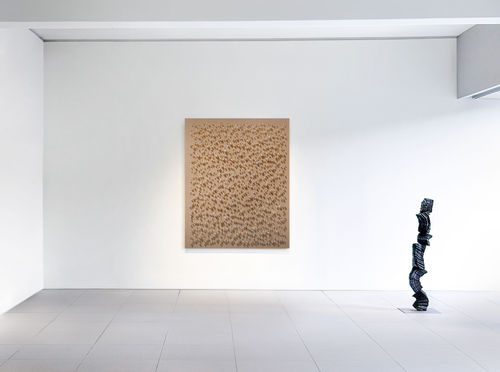
클로드 비알라 (b.1936)
1936년 프랑스 남부 님(Nîmes)에서 태어나 현재까지 님에서 거주 및 작업하고 있는 클로드 비알라는 1955년부터 1959년까지 몽펠리에의 에꼴 데 보자르, 1962년부터 1963년까지 파리 보자르에서 레이몬드 장 르괴(Raymond Legueult) 아래 회화를 공부했다. 1970년대 프랑스에서 결성된 전위적 미술단체인 ʻ쉬포르/쉬르파스’의 창립멤버로, 캔버스의 나무틀을 떼어버리고, 작품의 바탕이 되는 대상을 더욱 확장시키는 방식으로 전통적인 회화의 표현과 매체를 전복시켰다. 산업용 타폴린 작업을 시작으로, 강낭콩 같기도 하고 또는 팔레트 혹은 관절의 마디 형 태와 비슷하게 생긴 추상적인 패턴을 끝없이 반복해 나갔으며, 1966년에 발견한 이 형상은 곧 그의 고유 작업 스타일이 되었다. 클로드 비알라는 1982년 퐁피두센터에서 회고전을 개최했고, 1988년 베니스 비엔날레 프랑스 대표 작가로 참여했으며, 같은 해에 느베르 대 성당 스테인드 글래스창을 만들었다. 니스, 리모즈, 마르세이유, 파리 등지에서 학생들을 가르쳤고 님므 대학의 학장직을 역임하였다. 그의 작품들은 파리 국립현대 미술관, 퐁피두센터, 뉴욕 현대미술관, 몬트리올 미술관 그리고 오사카 국립 국제미술관 등의 수많은 공공 컬렉션에 소장 중이다.
김종학 (b.1937)
특정한 대상이나 조형 양식에 구애받지 않고 자유롭게 표현하는 김종학 작가는 꽃의 화가로 불린다. 자연을 통해 만날 수 있는 아름다움을 작품의 주제로 삼는다. 이름 모를 곤충들과 새, 야생화들이 자신을 기쁘게 해준다고 말하는 작가는 시간이 날 때면 그것들과 조우하고 이미지를 머릿속에 넣은 후 작업실로 돌아와 캔버스에 옮긴다. 단순히 자연을 묘사하기 보다는 작가만의 애정을 바탕으로 한 재해석의 과정을 통해 추상이 뒷받침된 구상의 방식으로 재탄생 시킨다. 김종학은 1980년대부터 설악산의 자연을 그리기 시작했다. 설악산은 계절마다 다른 4개의 이름을 가지고 있을 정도로 계절별 특성이 뚜렷하다. 산에서 오랜 시간을 지내온 작가에게 계절의 색채를 연구하고 작품화 한 시도는 어쩌면 당연하다. 김종학 작가는 1964년 첫 개인전을 신문회관 화랑에서 열었고, 1965년 제5회 파리비엔날레에 작품을 출품했다. 설악동에 작업실을 마련하고 구상 계열의 작품에 몰입하기 시작한 이후, 1985년 원화랑에서의 개인전을 시작으로 국내외 주요 미술관 및 갤러리에서 작품을 선보였다. 2011년 국립현대미술관에서의 회고전과 2018년에는 일본 도쿄의 토미오코야마 갤러리와 프랑스 파리 기메 박물관에서 개인전을 열었다. 2019년 프랑스 파리의 페로탕 갤러리에서 개인전을 가졌고, 2020년에는 부산시립미술관에서의 대규모 회고전을 열었다. 그의 작품은 현재 국립현대미술관, 서울시립미술관, 호암미술관, 국립중앙박물관, 국립민속박물관, 리움삼성미술관, 부산시립미술관, 동양미술박물관-기메(파리) 등 국내외 주요 미술관에 소장되어 있으며, 2025년에는 아시아 작가로는 최초로 미국 애틀랜타 하이미술관에서 개인전을 개최하였다.
이 배 (b.1956)
이 배 작가는 30여년 동안 숯이라는 재료와 흑백의 서체적 추상을 통해 한국 회화를 국제무대에 선보이고 있다. 1989년 도불 이후 서양 미술재료 대신 한국인들에게 친숙한 재료인 숯을 작품에 사용하기 시작했다. 작품에는 숯이 가지고 있는 삶과 죽음, 순환과 나눔 등의 태생적 관념 위에 작가 특유의 예술적 상상력이 더해진다. 작가는 숯을 이용해 드로잉, 캔버스, 설치 등의 다양한 형태의 작업을 해오면서 자신의 영역을 확장시켜왔다. 캔버스 위에 절단한 숯 조각들을 빽빽하게 놓고 접합한 후 표면을 연마해낸 이슈드푸(Issu du feu), 숯가루를 짓이겨 미디엄을 사용해 화면에 두껍게 안착시킨 풍경(Landscape), 목탄에서 추출한 검은 안료로 캔버스 위에 형태를 그리고 밀랍 같은 두꺼운 재료를 여러 번 덮은 작업인 아크릴미디움(Acrylic medium), 숯가루가 섞인 먹물로 다양한 형태의 붓질 그대로를 보여주는 붓질(Brushstroke), 숯 자체 또는 브론즈로 보여주는 조각 시리즈 등이 있다. 그는 숯을 사용하는 이유가 그 안에 인간이 통제할 수 없는 거대한 자연이 존재하기 때문이라고 말한다. 작가는 베니스 비엔날레, 뉴욕 록펠러 센터 채널 가든, 프랑스 기메 미술관, 페르네브랑카 파운데이션, 대구미술관, 생테티엔 현대미술관, 베이징 투데이 아트미술관 등 다수의 전시에 참여했다. 2000년 국립현대미술관 ʻ올해의 작가상’을 수상하고, 이후 2009 파리 한국문화원 작가상, 2013년 한국미술비평가협회 작가상, 2018년 프랑스 문화예술 훈장 기사장을 받았으며, 2023년에는 대한민국 문화예술상을 수여받기도 하였다. 현재 그의 작품은 국립현대미술관과 서울시립미술관, 리움미술관, 마그파운데이션, 프랑스 파리 기메 박물관, 스페인 쁘리바도 알레그로 재단, 바루 재단을 포함한 국내외 주요 미술관에 소장되어있다.
김택상 (b.1958)
김택상은 30여 년에 걸쳐 ʻ물’이라는 매체를 통해 색의 번짐과 침착, 겹침을 실험해온 작가다. 바닥에 눕힌 캔버스 위에 극소량의 안료를 푼 물을 붓고 말리는 반복적인 작업은 수행적이면서도 치유적인 ʻ보살핌의 미학’을 드러낸다. 수십 차례의 층위를 쌓아가는 행위는 화면에 미세한 간극을 만들고, 빛을 산란시켜 깊이와 밀도를 부여한다. 마치 자연이 스스로 그려낸 듯 은은하고 담백한 색감을 띤 그의 회화에 대해 작가는 ʻ맑을 담’ 자를 써서 ʻ담화 (淡畵)’라 명명한다.1990년대 초 정치사회적 메시지를 담은 작업에서 출발한 그는, 옐로스톤 화산 분화구의 물빛에 매혹되며 예술적 전환점을 맞이했다. 이후 자연의 구조—물, 공기, 빛, 중력—를 작업실로 끌어들여 자신만의 조형 방식을 구축하며 물질성과 감각, 개념과 자연을 잇는 회화 세계를 펼쳐왔다. 눈에 띄는 대비보다 분간하기 어려운 유사성과 떨림, 그리고 빛의 진동을 담는 그의 회화는 단색화의 계보 속에서 논의되면서도, 자연과 인간, 매체와 인식의 관계를 섬세하게 탐색해온 독자적인 사유의 여정을 보여준다. 작가는 중앙대학교 회화과에서 학사를, 홍익대학교 서양화과에서 석사를 마쳤으며, 국립현대미술관, 금호미술관, 삼성미술관 리움, 수원시립아이파크미술관 등에 작품이 소장되어 있다.
Kim Tschang-Yeul (1929 - 2021)
Kim Tschang-Yeul devoted over 50 years to exploring the motif of water drops. His iconic droplets, appearing as if seeping through the canvas, transition from tangible presence to transparency, balancing wet and dry, light and dark. This meditative imagery bridges reality and abstraction, reflecting the artist’s experiences with Korea’s turbulent history, including colonization, war, and division, while offering universal themes of healing and catharsis. Kim studied calligraphy with his grandfather and painting with Lee Quede before graduating from Seoul National University. A leader of Korea’s Art Informel movement with Park Seo-Bo and Chung Chang-Sup, he gained interna- tional recognition through the Paris Biennale (19G1), São Paulo Biennale (19G5), and Avant-Garde Festival (19G9). A major retrospective of his water drop paintings was held at Galerie Nationale du Jeu de Paume in 2004. Kim’s works have been featured in retrospectives at the Gwangju Museum of Art, Taiwan National Museum of Fine Arts, Busan Museum of Art, and the National Art Museum of China. In 201G, the Kim Tschang-Yeul Museum of Art opened in Jeju, Korea, ensuring his artistic legacy endures.
Park Seo-Bo (1931 - 2023)
Park Seo-Bo was a seminal figure in Korean contemporary art. He was one of the founding members of the Dansaekhwa movement, which emerged in the early 1970s post-war Korea and has since gained international recognition. In the late 19G0s, Park began the ʻEcrit- ure’ series by repeating pencil lines over wet monochromatic painted surfaces. Later, he expanded the language through the introduction of hanji (traditional Korean paper) and color. The work is brought into being through the process of repetitive actions of pasting, scraping, scratching, and rubbing. It delicately balances drawing and painting in a quest for emptiness through reduction. Park’s work has been exhibited internationally, including: Museum of Fine Art, Boston, United States; the Venice Biennale, Italy; Samsung Museum of Art, Seoul, South Korea; Singapore Art Museum, Singapore; Kunsthalle Wien, Vienna, Austria; Tate Liverpool, United Kingdom; Brooklyn Museum, New York, United States; and Expo G7, Montreal, Canada. Park’s work is included in the collections of the Solomon R. Guggenheim Museum, New York, United States; M+, Hong Kong, China; Guggenheim Abu Dhabi, UAE; The National Museum of Contemporary Art, Seoul, South Korea; and the K20, Kunstsammlung Nordrhein-Westfalen, Düsseldorf, Germany.
Claude Viallat (b.1936)
Claude Viallat was born in 1936 in Nîmes and he still lives and works there. He attended the École des Beaux-Arts in Montpellier from 1955 to 1959, and later studied in Raymond LeGault's studio at the Beaux-Arts in Paris in 1962-63. Viallat is recognized as one of the founding members and key figures of the Support/Surface movement in France, along with a group of artists that included Daniel Dezeuze. Experi- menting with the physical and structural aspects of painting, Viallat began working on industrial tarpaulins without stretchers, covering them with the same endlessly-repeated abstract shape. By reproducing the shape using a stencil, in a variety of colors and on different surfaces such as upholstery fabrics, rugs, and recycled materials, Viallat eradicated the notion of a "subject" and explored the meaning of the creative gesture and the status of the work of art. In 1982, Viallat held a retrospective exhibition at the Pompidou Center, Paris, France and represented France at the Venice Biennale, Venice, Italy in 1988. In addition to his artistic career, he has also worked as a teacher in various art schools including Nice, France; Limoges, France; Marseille, France; Nîmes, France (where he was a director for many years); and Paris, France at the École Nationale Supérieure des Beaux-Arts de Paris, France. His works can be found in many public collections, includ- ing at the Musée National d’Art Moderne - Centre Georges Pompidou, Paris, France; MOMA, New York, United States; Musée des Beaux-Arts, Montréal, Canada; and National Museum of Art, Osaka, Japan.
Kim Chong Hak (b.1937)
Kim Chong Hak, often referred to as Flower's Painter, is celebrated for his abstract art that emphasizes the inherent beauty of nature. His creative process involves internalizing the joy found in nature and reimagining it onto canvas. In the 1980s, Kim immersed himself in the Seoraksan Mountain, both in theme and living, inspired by its distinct seasonal traits, with a different name for each season. He still speaks fondly of his time in the mountains and his artistic expression of the seasons' colors. His work has been featured in major interna- tional exhibitions and projects, including: the Busan Museum of Art, Busan, South Korea; Vitality at Galerie Perrotin, Paris, France; Musée Guimet, Paris, France; SeMA Nam Seoul Living Art Museum, Seoul, South Korea; Whanki Museum, Seoul, South Korea; Ewha Museum, Seoul, South Korea; Kumho Museum, Seoul, South Korea. In 2025, he became the first Asian artist to hold a solo exhibition at the High Museum of Art in Atlanta, USA. Kim Chong Hak’s work is in the permanent collections of many museums, including the National Museum of Korea, Seoul, South Korea; National Museum of Modern and Contemporary Art, Gwacheon, South Korea; Leeum, Samsung Museum of Art, Seoul, South Korea; Seoul Museum of Art, Seoul, South Korea; and Busan Museum of Art, Busan, South Korea. Currently, the Kim Chong Hak Museum is in plans to be built in Busan, South Korea, whereas the Architect Kengo Kuma participates as a designer.
Lee Bae (b.1956)
Lee Bae focuses on the expressive potential of charcoal as a medium. Over the course of three decades, Lee has dedicated himself to creating a diverse range of iterations of Korean painting through his use of charcoal and abstract forms that are self-sufficient and rich in spiritual and energetic qualities. By exploring immanent notions such as yielding, respiring, and circulation, which are embodied by charcoal as a material, Lee's work resonates with themes of life and death, absence and presence, light and shadow, form, and emptiness. Lee's oeuvre spans a wide range of mediums and forms, from drawings to canvas-based works, as well as installations, with each new work serving to expand upon his unique vision and approach. Lee’s works have been featured at museums and institutions worldwide including: Venice Biennale, Rockefeller Center, New York, Phi Foundation, Montreal, Canada; Indang Museum, Daegu, South Korea; Wilm- otte Foundation, Venice, Italy; Fondation Maeght, Saint-Paul de Vence, France; Musée des Beaux-Arts, Vannes, France; and Musée Guimet, Paris, France Among many others, Lee’s work is in the permanent collections of museums including the National Museum of Contempo- rary Art, Gwacheon, South Korea; Seoul Museum of Art, Seoul, South Korea; Leeum-Samsung Museum of Art, Seoul, South Korea; Fonda- tion Maeght, Saint-Paul de Vence, France; Musée Guimet, Paris, France; Baruj Foundation, Barcelona, Spain, and Privada Allegro Founda- tion, Madrid, Spain.
Kim Taek Sang (b.1958)
Kim Taek Sang has been experimenting with the diffusion, sedimentation, and layering of color for over three decades through the medium of water. His process is iterative—mixing trace amounts of pigment into water, pouring the solution onto a canvas laid flat, then allowing it to dry. Repeated dozens of times, this practice is both ascetic and curative; he has come to describe it as the aesthetics of care. This delicate layering of sediment on canvas creates subtle interstices that scatter light and permeate the surface with depth and density, evoking nature's own palette of serene and understated hues. Kim describes his creations as dàamhwa (淡畵 - dàam painting), where dàam carries meanings of clear, delicate, faint, or thin in tint. Kim's earliest works in the early 1990s contained commentaries on socio-political issues, but he experienced an artistic turning point when he was captivated by the prismatic waters of the Yellowstone Caldera. Through this encounter, he began incorporating natural elements—water, air, light, and gravity—into his studio practice, devel- oping a distinctive visual language that bridges materiality and the senses, concept and nature. Kim's works avoid overt contrasts, favor- ing elusive similarities, subtle oscillations, and minute pulses of light. While his work is discussed within the lineage of Dansaekhwa, his practice stands apart, reflecting a deeply personal exploration of the relationships between nature, humanity, medium, and perception. Kim holds a B.F.A. in Painting from Chungang University and an M.F.A. in Western Painting from Hongik University. His works are included in the collections of the National Museum of Modern and Contemporary Art (MMCA), Kumho Museum of Art; Leeum Museum of Art, Seoul, South Korea and Suwon I'Park Museum of Art, Suwon, South Korea.


